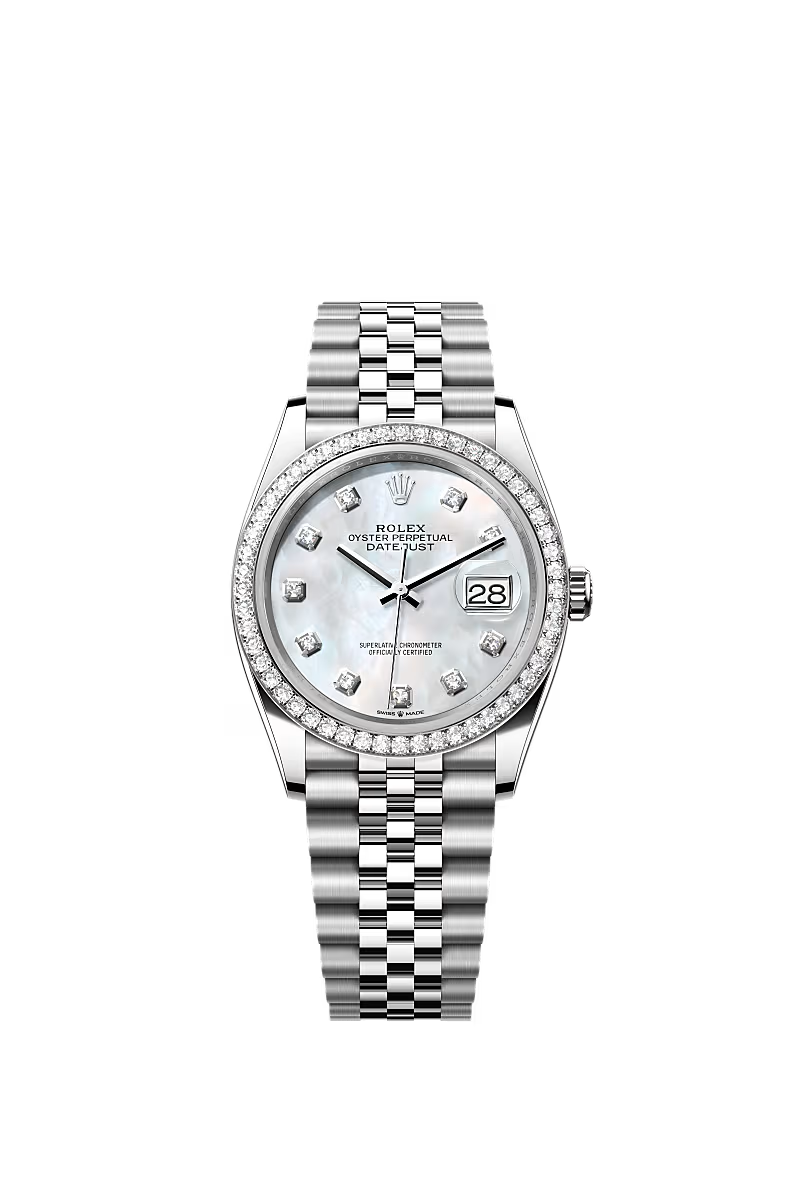
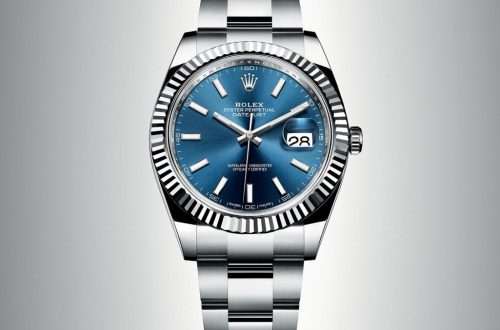
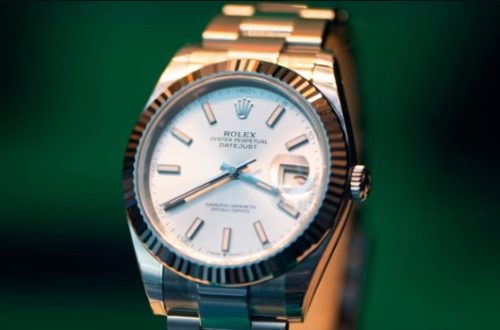
The Datejust has changed slowly enough that modern watches still carry details established many decades ago. That continuity is one reason vintage references matter when evaluating replica versions. A modern copy may reproduce the fluted bezel and Jubilee bracelet, yet understanding earlier Datejust generations helps explain why dial text, caseback shape, bezel style and date presentation should not be mixed randomly between references.
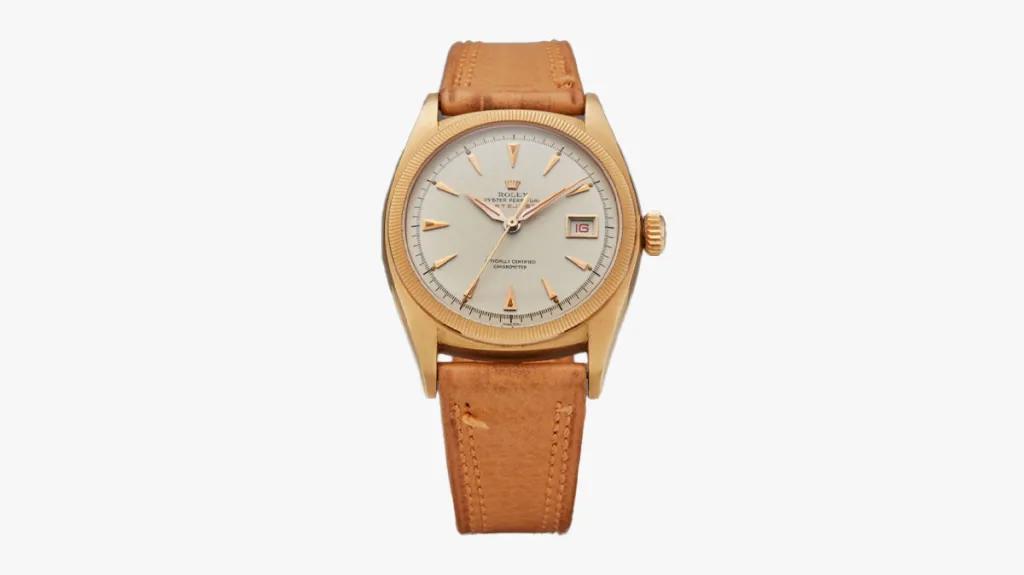
Early 6104 and 6105 references show how unsettled the formula once was
Early 1950s Datejust references such as 6104 and 6105 appeared in multiple metals and dial configurations. The details were less standardised than on later models: dial signatures varied, bezel treatments differed and unusual examples can look surprisingly far from the Datejust most readers picture today. Some references are associated with smooth or engine-turned bezels, and period dials can use different chronometer text arrangements.
For replica work this matters because early Datejust dial typography and bezel style should match the period being represented. A modern-looking font on an otherwise vintage case can be more distracting than a small dimensional error. The same applies to lume plots, hand shape and the relationship between the date aperture and cyclops.

The Thunderbird introduced a more tool-like Datejust
The Turn-O-Graph and so-called Thunderbird-associated Datejust references brought a rotating bezel into a collection otherwise known for dressier everyday watches. That combination created a distinctive bridge between the Datejust and Rolex’s emerging professional models. The design is useful for collectors because it shows that vintage Datejust history is not simply a sequence of fluted-bezel watches.
A replica interpretation needs to get the bezel scale and case relationship right. If the rotating bezel is too thick, the watch can look like a modern sports model. If it is too fine, the elapsed-time function loses visual presence. Vintage Datejust rotating bezel proportion is therefore a reference-specific detail rather than a generic styling choice.
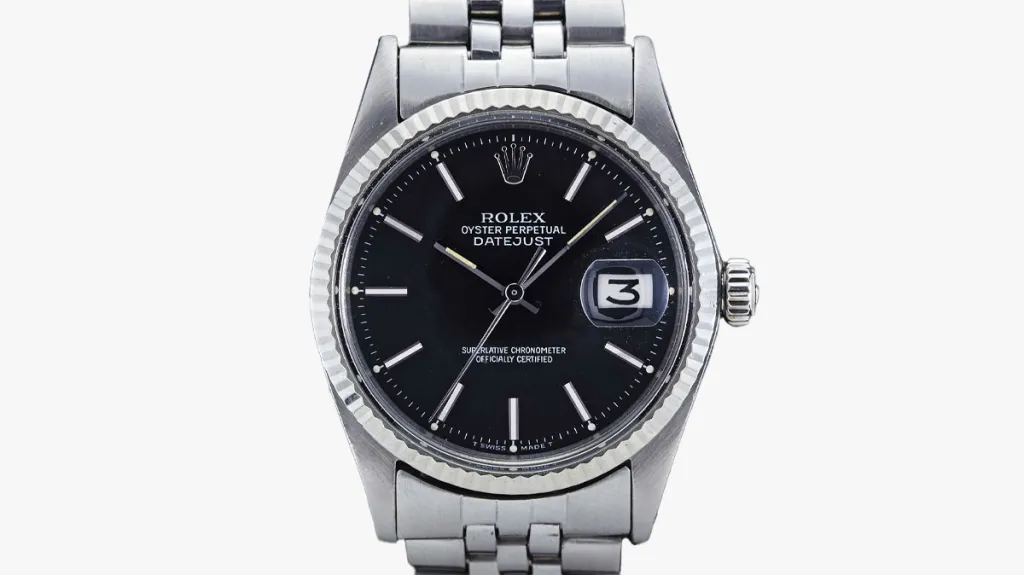
The 16XX family created the familiar Datejust language
By the late 1950s and into the following decades, the 16XX family established many combinations that still define the Datejust. References such as 1600, 1601 and 1603 are associated with smooth, fluted and engine-turned bezel treatments. The steel 1601 with a white-gold fluted bezel became especially recognisable, while the flatter caseback and Cyclops date presentation helped create the familiar profile seen across later generations.
This period is the most useful bridge to modern replicas because the design became more standardised without losing vintage proportions. Datejust 1601 case dial and fluted bezel balance is worth studying if a replica is meant to evoke the older watch rather than a current 36mm model. Bracelet stretch, acrylic crystal character and dial ageing are also part of the vintage appearance, though artificial ageing should not be confused with genuine patina.
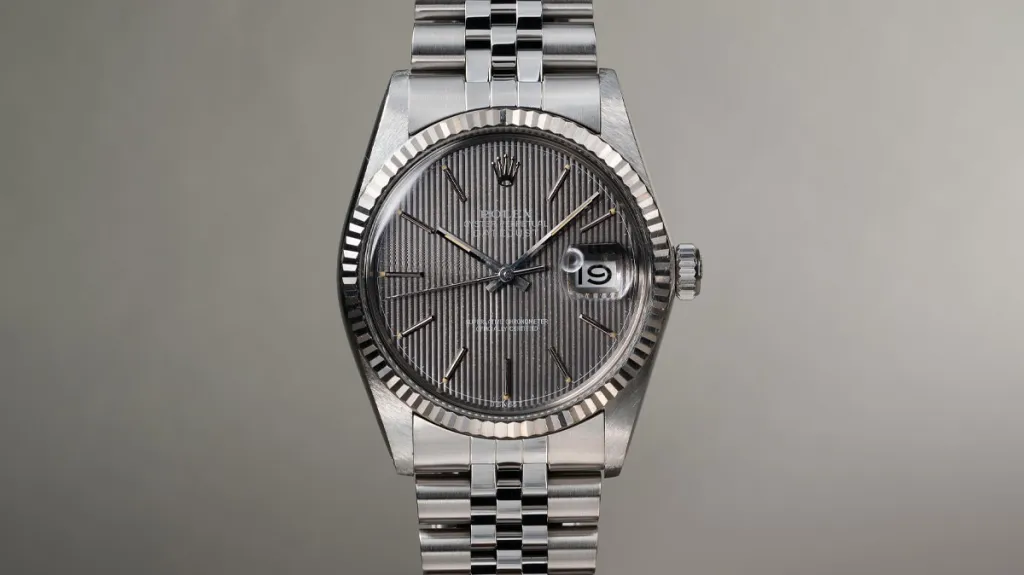
Our newer article on 2026 Datejust design changes shows how far the collection has evolved while retaining the same basic vocabulary. The TopReplica Rolex journal uses vintage and modern references together because they help readers distinguish a real generation-specific detail from a generic replica styling cue. The useful lesson is simple: a historically coherent Datejust replica should look like one specific era, not a mixture of features borrowed from several decades.