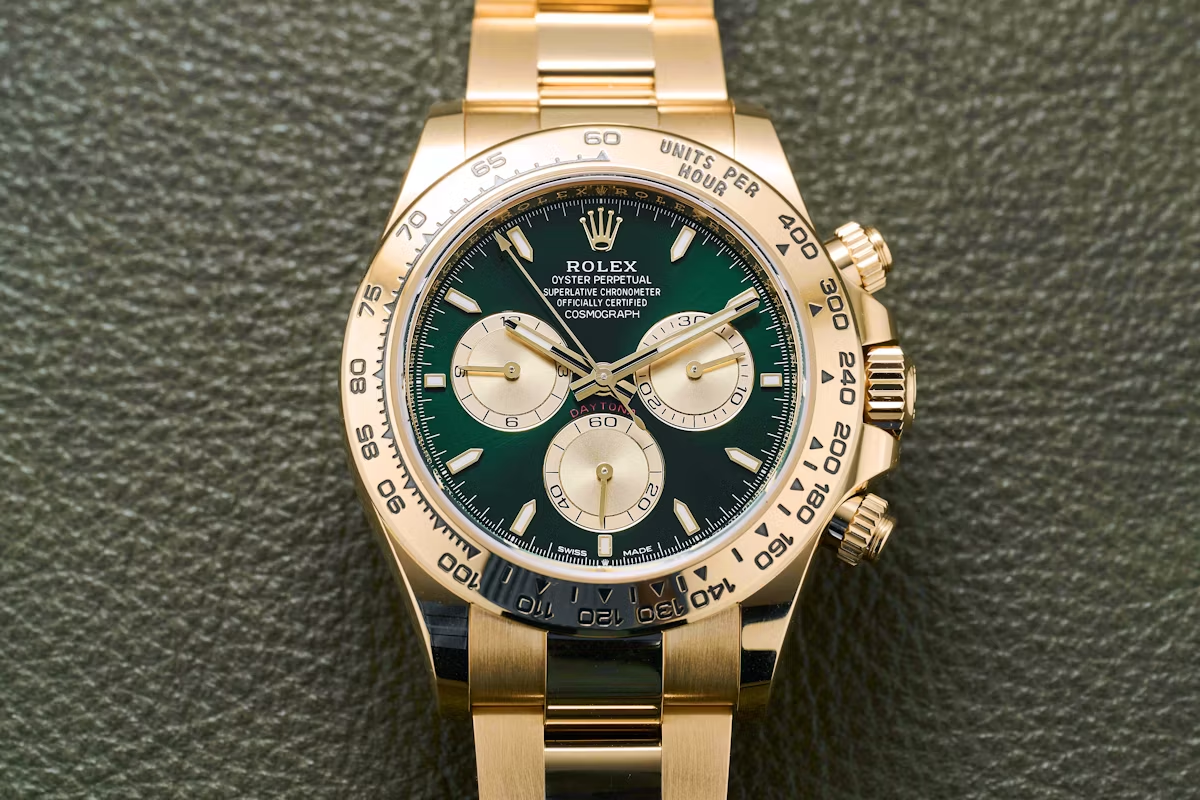
Two Rolex-style watches can look almost identical from the front and still behave very differently once you begin using them. Pull out the crown, adjust the date, move a GMT hand or operate a chronograph and the importance of movement architecture becomes much easier to understand.
This is also where product terminology becomes confusing. Listings may use phrases such as Japanese automatic, Miyota, clone calibre or Super Clone as though they belong to a simple quality ladder. They do not.
MIYOTA is a movement manufacturer with multiple mechanical calibre families. “Super Clone,” by contrast, is a commercial term used in the replica-watch market rather than a manufacturer-issued technical standard. The useful buying question is therefore not simply which grade sounds more premium, but what actually changes mechanically, functionally and physically between two versions of the same watch design.
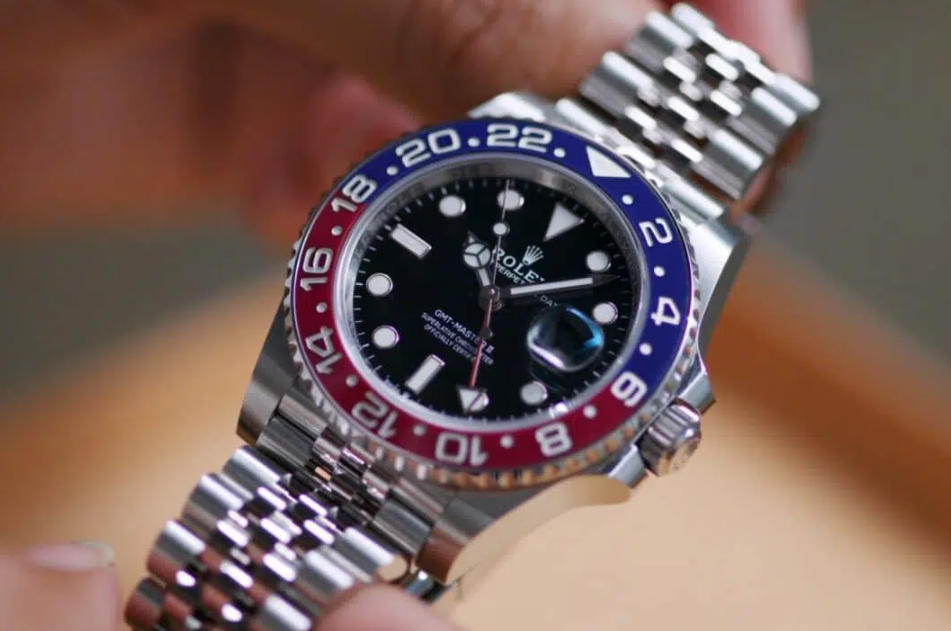
Quick Comparison: What Movement Architecture Can Change
| Watch Type | Movement Detail to Verify | Why It Matters |
|---|---|---|
| Time Only / Time & Date | Crown positions, date setting, movement height | Usually the simplest movement comparison |
| GMT | Independent local hour vs independent GMT hand | Changes how the second time zone is used |
| Chronograph | Start, stop, reset, subdial functions and movement layout | Architecture can affect both operation and case design |
| More Complex Calendar Designs | Which displays are functional and how they are adjusted | Visual similarity does not guarantee identical operation |
Movement choice tends to matter more as the number of complications increases. A simple three-hand watch can provide a similar everyday experience across several movement families. In a GMT or chronograph-style watch, however, the movement may change how one of the defining functions of the model actually works.
Miyota Is a Manufacturer, Not a Single Movement
One of the easiest mistakes to make when reading a listing is assuming that “Miyota movement” describes one fixed technical specification. It does not. MIYOTA produces multiple automatic movement families with different dimensions, frequencies, jewel counts and published accuracy ranges.
Two useful examples are the MIYOTA 8215 Standard Automatic and the MIYOTA 9015 Premium Automatic. Their official specifications make it clear why the exact calibre matters.
MIYOTA 8215 vs 9015: Official Specification Example
| Specification | MIYOTA 8215 | MIYOTA 9015 |
|---|---|---|
| Movement Type | Automatic + hand winding | Automatic + hand winding |
| Movement Height | 5.67mm | 3.90mm |
| Vibration Frequency | 21,600 vibrations/hour | 28,800 vibrations/hour |
| Published Accuracy | -20 to +40 sec/day | -10 to +30 sec/day |
| Running Time | Approximately 42 hours | Approximately 42 hours |
| Jewels | 21 | 24 |
| Basic Functions | 3 hands, date, quick date setting, stop seconds | 3 hands, date, quick date setting, stop seconds |
These figures come directly from MIYOTA’s current manufacturer-published specifications for the 8215 and 9015. They should not be applied automatically to every watch advertised simply as “Miyota.” Unless the seller identifies the actual calibre, the manufacturer name alone does not provide enough information to compare the finished watch accurately.
What the 8215 and 9015 Example Actually Teaches
The point of comparing these two movements is not to declare one universally better. It demonstrates why exact calibre information matters. For example, MIYOTA publishes a height of 5.67mm for the 8215 and 3.90mm for the 9015.
That does not mean a watch using the 9015 will automatically be exactly 1.77mm thinner. Finished case dimensions also depend on dial spacing, hands, movement holders, crystal height, caseback construction and other engineering decisions. It does show, however, that movement architecture can affect the packaging options available to the case designer.
Beat Rate Is Useful Information, Not a Quality Score
Movement discussions often reduce quality to beat rate. A higher vibration frequency can create a visually smoother progression of the seconds hand, but frequency alone does not establish overall accuracy, durability, regulation quality or serviceability.
Even the two MIYOTA examples above illustrate why several specifications need to be considered together. The 8215 and 9015 differ in frequency, height, jewel count and published accuracy range while both are automatic movements with approximately 42 hours of published running time.
A movement should therefore be evaluated as a complete mechanical system rather than ranked using one specification alone.
What Does “Super Clone Movement” Actually Mean?
“Super Clone” is fundamentally different from a manufacturer name such as MIYOTA. It is a market-grade description rather than one standardized calibre or an independently defined engineering specification.
Different watches sold under the Super Clone label may use different movement architectures and may reproduce the functions, layout or visual appearance of a reference movement to different degrees. The term alone does not tell the buyer the exact movement installed, its dimensions, its measured accuracy, how each complication operates or how easy the movement will be to service.
The same caution applies to terms such as “AAA,” “1:1” and “Swiss Grade.” These are commercial descriptions, not universal technical standards. Because “Miyota” and “Super Clone” describe fundamentally different things, buyers should compare the actual architecture rather than treating the labels as a simple quality ladder. A more detailed Miyota vs Super Clone movement comparison looks at those practical differences from the buyer’s side, including movement type, functions, price and what should be checked before paying for an upgrade.
A Clone-Calibre Name Does Not Mean a Genuine Rolex Movement
A replica-market movement may use a calibre-style designation or may be designed to resemble the layout of a genuine movement family. That does not make it a genuine Rolex-manufactured calibre.
Buyers should distinguish between a genuine manufacturer calibre, a third-party movement manufacturer such as MIYOTA, and a replica-market clone movement. These are separate categories and should not be presented as interchangeable.
What Should a Buyer Ask Instead of “Which Grade Is Better?”
- What exact movement or movement family is installed?
- Which functions are genuinely operational?
- How are the crown positions arranged?
- How is the date adjusted?
- If it is a GMT watch, which hour hand can be adjusted independently?
- If it is a chronograph, what does each subdial actually do?
- Does the movement architecture influence case thickness?
- What realistic repair or replacement options exist?
Answers to those questions provide far more useful information than a grade name on its own.
Why Buyers Choose Japanese Automatic Movements
A Japanese automatic movement can make sense when the main goal is straightforward mechanical timekeeping combined with a particular external watch design. For a conventional time-and-date watch, many buyers primarily need hours, minutes, seconds, a date display, automatic winding and practical everyday operation.
In that context, paying substantially more for a more specialized movement architecture may not matter to every buyer. This does not mean every Japanese movement is automatically more reliable or easier to service. The exact calibre, the quality of assembly and the repair options available locally still matter.
Why Buyers Consider Higher-Grade Clone Movements
The case for a more specialized clone movement becomes stronger when the architecture affects characteristics the buyer actually values. Depending on the watch, that may include crown-setting sequence, date-change behavior, hand arrangement, GMT adjustment, chronograph functions, case proportions or movement appearance.
The upgrade only has meaningful value when there is an identifiable difference. “More expensive” and “higher grade” should not be treated as technical explanations by themselves.
Daytona-Style Watches: Compare Functions, Not Just the Dial
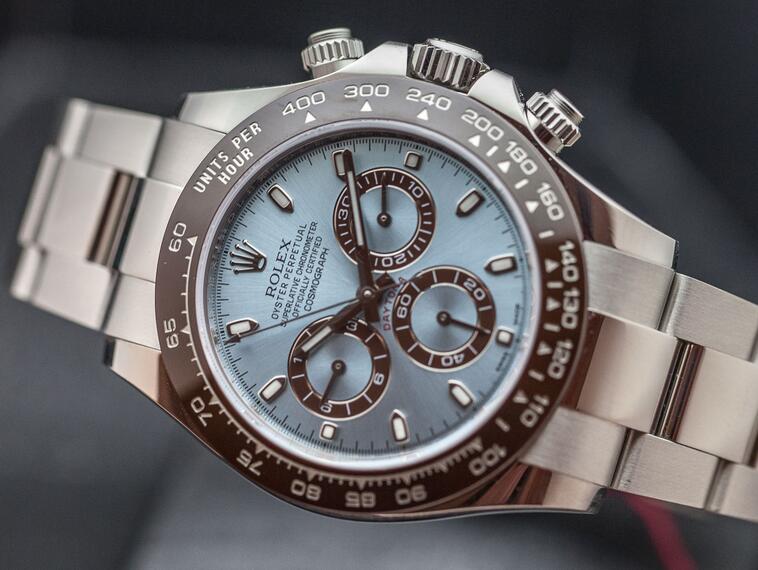
Chronographs provide one of the clearest examples of why movement architecture matters. Three subdials and two pushers may look convincing in photographs, but that does not prove that every movement version reproduces the same functions.
For reference, Rolex’s current genuine Cosmograph Daytona uses calibre 4131. Rolex’s official Cosmograph Daytona technical overview identifies it as the brand’s chronograph movement, while current model specifications describe a central chronograph seconds hand, a 30-minute counter and a 12-hour counter. Those specifications describe the genuine Rolex watch only; they should not be transferred automatically to a replica-style watch.
When comparing a Daytona-style replica or homage design, verify each version independently:
- Does the chronograph actually start and stop?
- Does it reset correctly?
- What does each subdial display?
- Are any visible indicators decorative rather than functional?
- Does the movement architecture change the thickness or side profile of the case?
A buyer should never assume that three visible subdials mean all three perform the same roles across different movement versions.
GMT-Master II-Style Watches: The Fourth Hand Is Only the Beginning
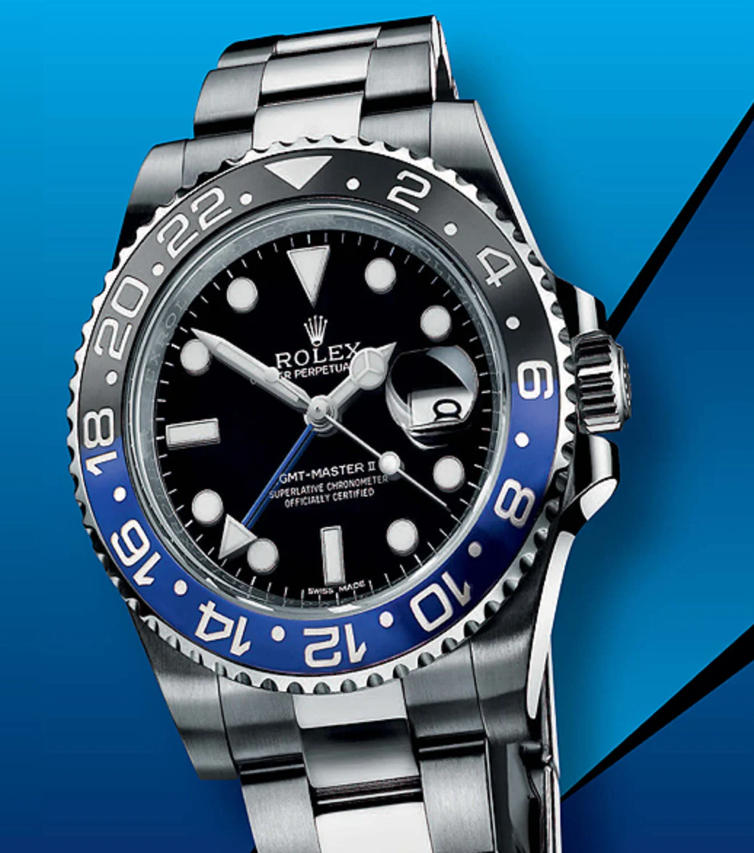
GMT watches present a different mechanical challenge. A fourth hand may indicate a second reference time, but simply confirming that the hand moves does not explain how the movement is designed to be used.
The genuine GMT-Master II provides a useful reference point. Rolex’s official GMT-Master II features page identifies the current watch as using calibre 3285, while Rolex’s technical material explains that the local hour hand can be adjusted independently in one-hour steps without disturbing the minute, seconds or 24-hour hand.
Again, that is a description of the genuine Rolex movement and not a specification that should automatically be assigned to a replica-style GMT watch.
What to Verify on a GMT-Style Watch
- Which hand moves independently?
- How is the 24-hour hand set?
- How does the date behave during local-hour adjustment?
- What happens when the adjustable hour hand crosses midnight?
- Which crown position controls each function?
For a buyer who plans to use the watch while traveling, these questions can matter much more than whether the dial simply includes a fourth hand.
Datejust-Style and Submariner-Style Watches Can Be Simpler Comparisons
A conventional time-and-date Datejust-style watch generally presents a simpler movement decision than a GMT or chronograph. The movement still matters, but visual construction may carry equal weight: date alignment, Cyclops positioning, dial-marker alignment, bezel finishing, bracelet construction and clasp operation can all affect the finished result.
A conventional Submariner-style watch follows the same principle. Buyers may need to balance movement choice against bezel alignment, case proportions, crystal quality, bracelet articulation, clasp construction and overall finishing.
Paying more for a movement does not automatically guarantee that every visible component improves by the same amount.
Case Thickness Can Reveal a Difference the Front View Hides
Online watch photography is heavily biased toward front-facing images. That can hide one of the most noticeable consequences of movement and case architecture: thickness.
Two watches can use similar dials, bezels, hands and bracelets while looking very different from the side. When comparing movement options, ask for actual case thickness, a clear caseback profile, crystal height, crown position and side-view photographs.
A thinner movement can give a case designer more freedom, but it does not guarantee a thinner completed watch because the case is a separate assembly with its own engineering requirements.
Do Not Assume a Movement Is Swiss From a Marketing Label
Terms such as “Swiss Grade,” “Swiss Quality” or “Super Clone” do not by themselves prove that a movement was manufactured in Switzerland. Origin claims should be supported by actual movement information rather than inferred from a commercial grade name.
Similarly, the use of a clone-calibre designation does not turn a replica-market movement into a genuine Rolex calibre.
Serviceability Should Be Part of the Purchase Decision
Mechanical watches may eventually need regulation, cleaning, lubrication, replacement components or more substantial repair. Serviceability can vary significantly between movement families.
A familiar third-party movement may be recognizable to more independent repairers, while a specialized clone architecture may require someone with experience servicing that specific movement. Parts availability can also change over time.
It would therefore be misleading to claim that every movement in one category is universally easier to service than every movement in another category.
When Is Paying More for a Movement Reasonable?
A higher price becomes easier to justify when the additional cost corresponds to something the buyer can identify and actually values. That might include different complication behavior, more suitable movement dimensions, a particular crown-setting arrangement, a specific GMT architecture, working chronograph functions or another measurable construction difference.
If two versions differ substantially in price but the only explanation is a stronger grade name, the buyer still does not have enough information to judge value.
A Practical Movement Comparison Checklist
| Question | Why to Ask It |
|---|---|
| What exact calibre is installed? | A manufacturer name alone may cover multiple movements |
| What functions actually work? | Appearance does not prove complication behavior |
| How does the crown operate? | Setting sequences can differ |
| How is the date adjusted? | Date mechanism behavior varies |
| How does the GMT function work? | Independent-hand behavior changes usability |
| What do the chronograph subdials do? | Subdial appearance alone is not enough |
| What is the actual case thickness? | Movement architecture can influence packaging |
| Can the movement be serviced locally? | Long-term ownership matters |
| What specifically changes when paying more? | Price should correspond to identifiable differences |
Final Verdict: Look Past the Movement Label
Movement terminology makes watch comparison sound simpler than it really is. “Miyota,” “clone calibre” and “Super Clone” are not three steps on one universal engineering scale.
MIYOTA is a movement manufacturer, and individual MIYOTA calibres have their own published specifications. Clone movements form a broad category of third-party replica-market architectures. Super Clone is a commercial grade description rather than one standardized technical specification.
For relatively simple watches, a straightforward automatic movement may provide everything a buyer needs. For GMT and chronograph-style watches, movement architecture can have a much greater effect on how the defining complication actually operates.
Compare the exact movement, working functions, dimensions and serviceability first. Compare the marketing grade and price second.
Editorial Methodology
This article separates manufacturer-published movement specifications from commercial replica-market terminology. Specific MIYOTA figures are taken from the manufacturer’s current pages for the named calibres rather than being applied generically to every product described as using a Miyota movement.
Rolex technical pages are used only to describe the functions of genuine Rolex reference designs such as the Cosmograph Daytona and GMT-Master II. Those specifications are not treated as specifications for replica or clone watches, which must be verified individually.
Terms such as “Super Clone,” “1:1,” “AAA” and “Swiss Grade” are treated as market descriptions rather than universal technical standards. Functional claims about GMT hands, chronographs or other complications should be verified on the individual watch and movement being discussed.
Primary Technical Sources
Editorial Disclosure
Rolex model names and calibre references are discussed for identification, technical comparison and editorial commentary. Replica and clone watches are not genuine Rolex products and are not manufactured, certified or endorsed by Rolex.